
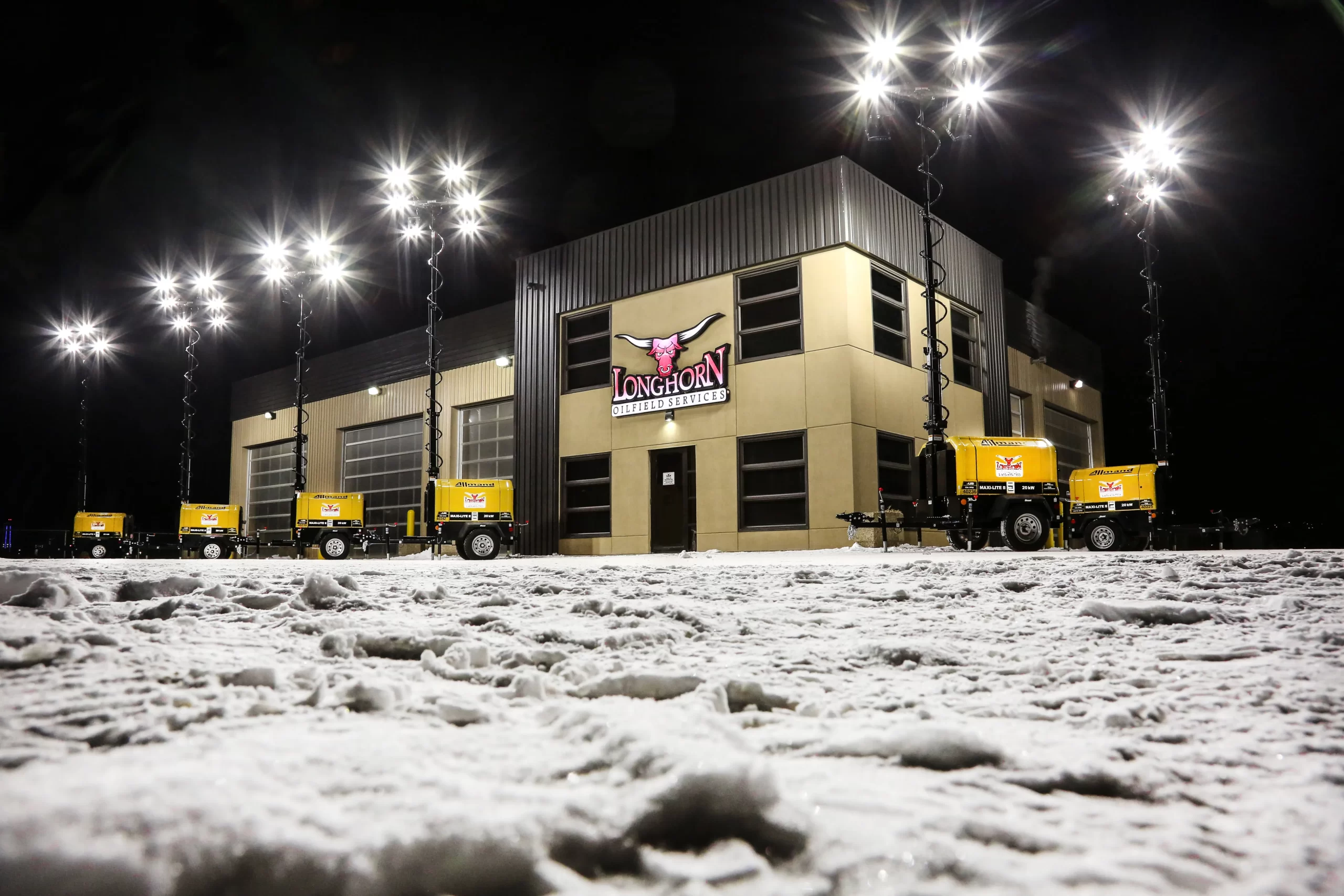
There’s a certain stubbornness in the oilfield when it comes to what equipment is used and whether to switch to new, often better equipment. If something worked last decade, crews tend to stick with it. Metal halide and halogen light towers have been around long enough that plenty of supervisors just trust them. They’re familiar, they’re available, and nobody’s going to argue with a foreman who’s been doing this for twenty years. But the conversation is shifting and being driven by fuel bills, maintenance logs, and crews who’ve actually run both systems side by side. LED light towers are pulling ahead, and the reasons are very practical once you dig into them.
Fuel Consumption: This Is Where the Real Savings Start
Ever been curious about the fuel consumption involved in LED lights on a remote oilfield site?
A standard metal halide light tower with four 1,000-watt fixtures burns through roughly 1.5 to 2 litres of diesel per hour. Run that through a 10-hour night shift and you’re looking at 15 to 20 litres of fuel, and that’s per tower, per night.
On a mid-sized oilfield site running four to six towers, that adds up to somewhere between 60 and 120 litres every single shift.
LED systems pulling the same or better light output typically consume 50 to 70 percent less power, which translates directly to diesel savings. Some modern LED tower setups run on as little as 0.5 litres per hour under normal operating conditions. Over a 30-day project, the difference per tower can be 500 litres or more.
At current diesel prices in Canada – which have hovered between $1.60 and $1.90 per litre across Alberta and Saskatchewan through 2023 and 2024 – that’s a meaningful number on any project budget.
It’s also worth noting that lower fuel burn means fewer refuelling stops. On remote pads where the fuel truck runs on a schedule, that’s not a small thing.
Light Quality and Site Coverage
Here’s something that doesn’t always get enough attention: brightness and fuel efficiency don’t have to be a trade-off with LED.
Metal halide towers produce a lot of heat and a lot of glare. The light tends to bloom in one direction and create harsh shadows in others, which can cause safety issues in winter and year-round. For crews working around heavy equipment in the dark, those shadows are a genuine safety concern.
LED fixtures produce a more uniform light spread. Just to get a little technical, the colour rendering index (CRI) on a quality LED fixture typically lands between 70 and 85, compared to metal halide which often sits in the 65 to 75 range.
Modern LED towers also reach full brightness instantly. Metal halide lights require a warm-up period, sometimes 5-10 minutes. LEDs are on at full capacity the moment they switch on.
Maintenance and Lifespan: The Cost That Nobody Budgets for Until It Bites Them
Metal halide bulbs have a rated lifespan of roughly 6,000 to 15,000 hours. Compare this to LED fixtures which routinely last 50,000 hours or more.
Some manufacturers even list rated lifespans of up to 100,000 hours for industrial-grade units.
For an operation running lights 10 hours a night, that’s the difference between replacing bulbs every year or two versus potentially never touching the fixture during the life of the project.
Bulb replacement on a metal halide tower sounds simple, but factor in the downtime, the labour, the cost of the bulbs themselves, and the fact that the ballasts also wear out and need replacement and you’re dealing with a real ongoing maintenance cost. LEDs remove most of that from the equation.
What Oilfield Site Crews Are Actually Saying
The practical feedback from field operators tends to come down to a few consistent points:
- Less babysitting. LED towers need fewer interventions during a shift, which lets crews focus on the actual work.
- Better visibility at the edges. The wider, more even light spread means fewer dark spots at the perimeter of a work zone.
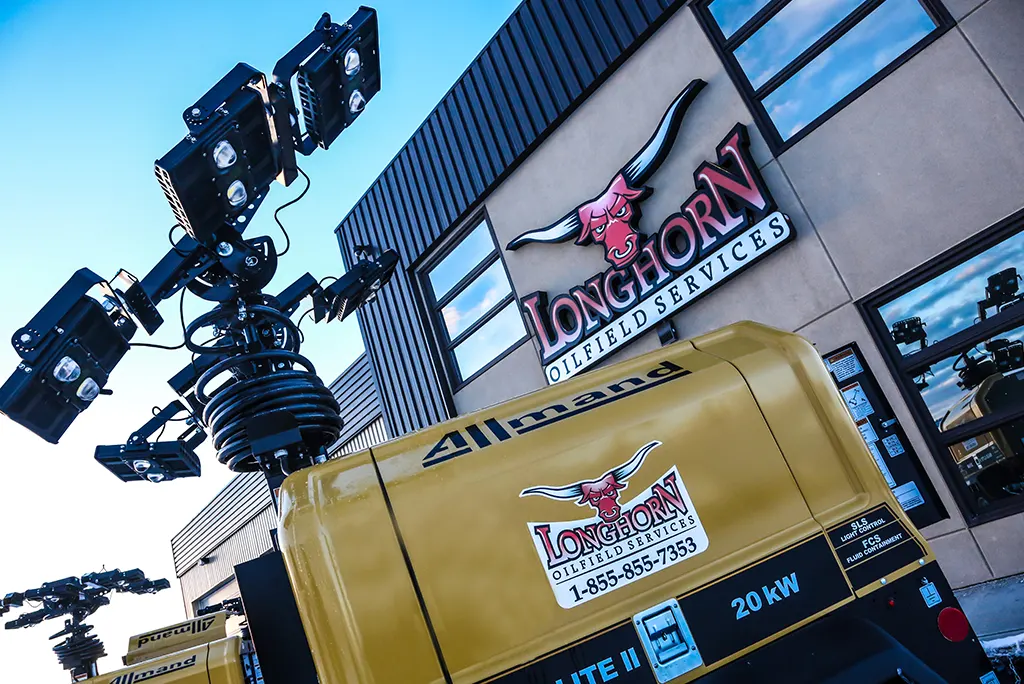
- Quieter generators. Because the engine doesn’t have to work as hard to meet power demand, LED-equipped towers often run noticeably quieter, a real benefit during long overnight operations.
Here’s The Upfront Cost Question Regarding LED Lighting & Power
In examining LED lighting on oilfield sites, we recognize that LED towers cost more upfront than metal halide equivalents.
A comparable LED unit might cost up to 20 to 40 percent higher. But when you account for fuel savings over a 30 to 90-day project, reduced maintenance calls, and the lower risk of mid-project equipment failures, the total cost of ownership swings pretty decisively toward LED in most scenarios.
For projects longer than a few weeks, the breakeven point often arrives well before the job is done.
Looking for reliable light tower solutions for your next oilfield project? Contact us and speak to our team at Longhorn Oil to learn how we can support your site with the right lighting equipment for the conditions and timeline you’re working with.