
Most people picture drilling rigs when they think about the oilfield. Rigs are big, loud, and hard to miss. But the truth is that a huge amount of oilfield work depends on smaller support equipment that barely gets talked about.
Take away the rig and the project pauses. Take away the support equipment and the whole place slowly starts falling apart. No lights. No fuel storage. No water. No power. Suddenly everybody is standing around waiting for a solution.
That is why oilfield equipment rentals are such a massive part of Western Canadian operations. Companies need flexibility. Jobs move. Timelines shift. Crews scale up and down constantly. Renting equipment simply makes more sense than buying everything outright and letting half of it sit in a yard for eight months of the year.
Many companies learned this lesson the expensive way after oil prices crashed back in 2014. A lot of fleets got downsized fast.
1. Power Generators Are Usually the First Call
Power comes first. Always. Remote oilfield sites are basically temporary industrial towns built in the middle of nowhere. Nothing works without electricity. Not trailers. Not lighting systems. Not communication equipment.
Power generators handle all of it.
Smaller units might power towable mobile office shacks or internet systems. Larger generators support heated camps, pumps, and full work zones operating around the clock. During winter drilling season, generators often run nonstop for weeks.
That is another thing people outside the industry forget. Canadian winters are brutal on equipment. Engines idle longer. Heaters work overtime. Fuel use jumps. Reliable power stops being a convenience and becomes survival-level important.
Quiet generators have become more popular too. After enough 14-hour shifts beside an old screaming diesel unit, crews start appreciating lower noise levels very quickly.
2. Light Towers Keep Sites Safer
There are stretches of winter in northern Alberta where daylight feels almost optional.
In December, some areas barely get seven hours of usable light. But the work keeps going.
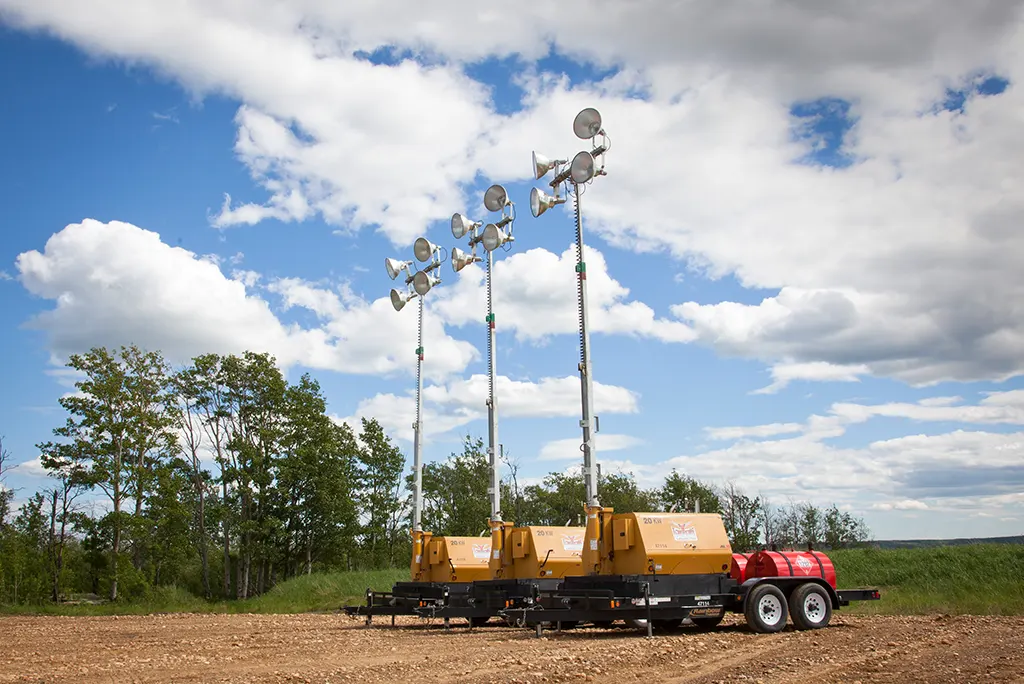
Portable light towers are one of the most common oilfield equipment rentals because they reduce visibility issues around heavy equipment, icy walkways, and loading zones. And poor lighting creates problems fast. One missed patch of ice or badly lit staircase is all it takes for somebody to get hurt.
LED lighting systems have improved things quite a bit over the last decade. They use less fuel and hold up better in rough weather. Older metal halide towers worked, but they were maintenance headaches.
Nobody misses changing those bulbs in -30.
3. Fuel Storage Matters More Than Most People Realize
Fuel logistics are boring right up until equipment runs dry halfway through a shift.
Fuel skids and portable storage tanks allow sites to stockpile diesel safely instead of relying on constant deliveries. That matters because remote access roads are unpredictable. Spring breakup turns roads into soup. Snowstorms shut things down. Deliveries get delayed constantly.
Most operations try to keep a fuel buffer on site for exactly this reason.
Typical rental tanks range from compact mobile units to several thousand gallons depending on project size. Drilling operations burn through fuel quickly, especially when generators, heaters, and heavy equipment are all running at once.
Without proper storage, projects become vulnerable to every weather delay that rolls through.
4. Water Systems Quietly Keep Camps Running
Fresh water is another thing people barely think about until there is a problem.
Remote camps need water for cooking, showers, laundry, dishwashing, sanitation, and drinking. A mid-sized crew can go through thousands of litres surprisingly fast. Potable water tanks help camps maintain stable supply between deliveries. In colder months, insulated systems become essential because frozen water lines create absolute chaos.
And nobody wants to explain to a crew why they cannot shower after a 12-hour shift because the water system failed overnight.
The best water storage systems are usually the ones nobody notices.
Why Oilfield Equipment Rentals Continue to Dominate the Industry
Oilfield projects change constantly. A setup that works perfectly for one location may be completely wrong for the next one.
That is why rentals remain so common. Companies can scale equipment up or down without committing to major purchases. They avoid long-term maintenance costs. They reduce storage headaches during slower periods.
More importantly, they stay adaptable. Because out in the field, plans change all the time. Roads wash out. Crew counts shift. Weather delays happen. Equipment needs change halfway through a project.
The sites that run best are usually not the flashiest ones. They are the ones where the basics are covered properly, with reliable power, stable lighting, fuel on hand, and water flowing.
Does your next project need the best in oilfield equipment rentals built for the harshest Canadian conditions? Please reach out and contact us. Connect with Longhorn Oilfield Services today to keep your crews powered, supplied, and ready to work without unnecessary downtime.