

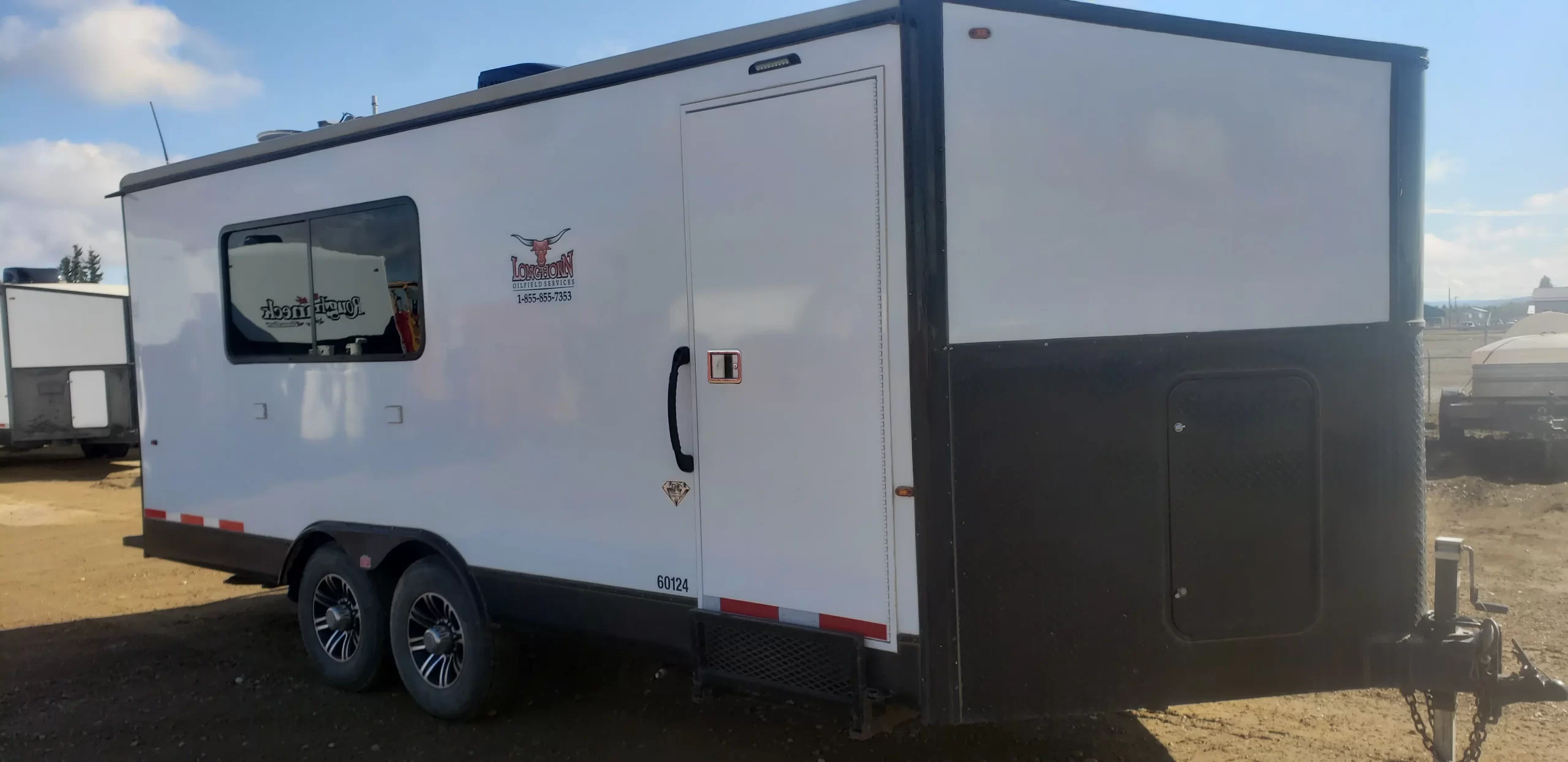
Choosing a wellsite trailer sounds straightforward until you start looking at what the trailer actually needs to do. A supervisor who is living at a remote location for several days has very different requirements from a group of engineers, consultants, or field staff who need somewhere to sit down, work, review documents, and get out of the weather.
That distinction is where the choice between a roughneck trailer and a towable office trailer becomes useful. Both are designed for oilfield and remote work environments, but they are not interchangeable. One is built much more around living on location, while the other is intended to give a working crew a practical office away from the main office.
Start With What People Will Actually Do Inside The Trailer
The easiest way to make the wrong choice is to start with the trailer instead of the people using it. Think about what happens during a normal day on the site, because that usually makes the answer pretty obvious.
A roughneck trailer makes more sense when one person needs to stay on location and have the basic comforts of home available.
A consultant, supervisor, lease operator, or other field professional may need somewhere to sleep between shifts, prepare meals, shower, and keep personal belongings without sharing a common accommodation area. In that situation, a trailer with proper living facilities is far more useful than a room full of desks.
A towable office trailer serves a different purpose. It gives a group of workers somewhere to sit and actually conduct business while they are in the field, whether that means reviewing plans, holding a meeting, completing paperwork, or keeping several people working from the same location. It is an office first, rather than accommodation that happens to contain a desk.
That difference sounds minor when you describe it, but it can completely change what works once the trailer arrives at the lease.
What You Get With A Roughneck Trailer
The roughneck trailer is designed around the reality of having someone live at the wellsite rather than simply visit it during a shift. That makes the interior much more residential in its function, even though the trailer itself is intended for a demanding industrial environment.
A typical Longhorn roughneck configuration includes a queen bed, full kitchen, and full bathroom. That combination gives a worker the ability to eat, sleep, clean up, and work through the day without relying on separate camp facilities for every basic need.
The kitchen is particularly useful for someone staying on location for an extended period. Having a proper space to prepare food and store supplies is a very different experience from relying on a microwave in an office trailer or driving into town whenever a meal is needed.
The private sleeping area matters just as much. Remote oilfield work can involve long shifts and irregular schedules, so having a dedicated bedroom gives the occupant a place to properly rest without turning a common work area into a makeshift bedroom.
In other words, the roughneck trailer is the better fit when the question is, “Where is this person going to live while the job is underway?”
Where A Towable Office Trailer Makes More Sense
Now change the scenario.
You have several people arriving at a remote site during the day, and their main requirement is somewhere to work rather than somewhere to sleep.
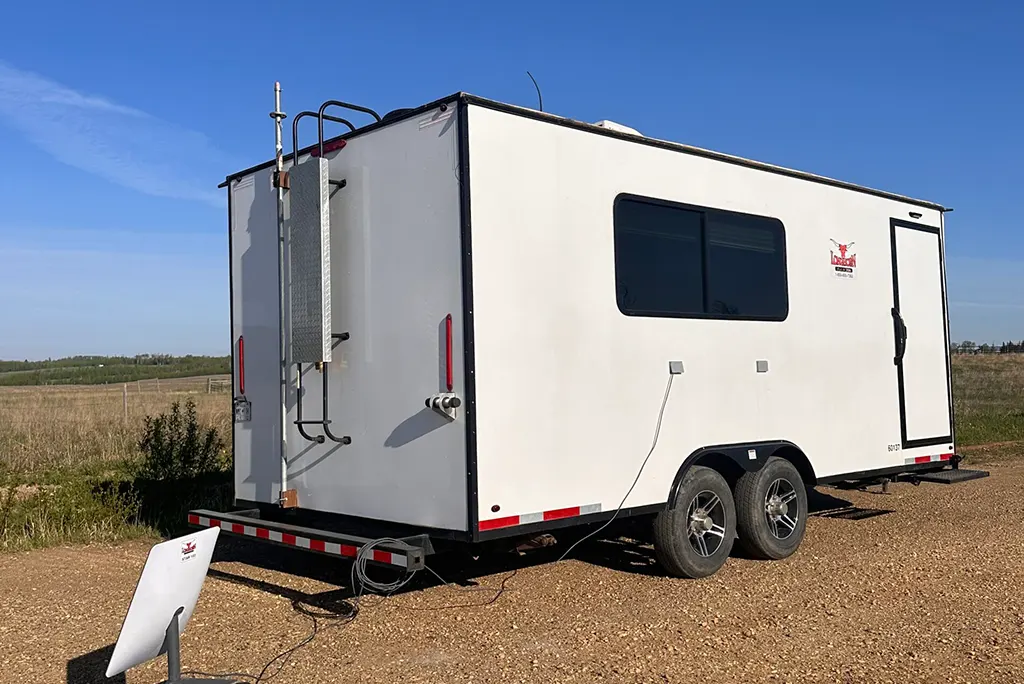
That is where a towable wellsite trailer starts making much more sense. Instead of dedicating valuable floor space to a full residential setup, the trailer can provide workstations and the basic amenities people need to stay productive throughout the shift.
Workstations are the important part here. A field office needs enough usable desk space for people to open laptops, review drawings, complete reports, make calls, and deal with the administrative side of the operation without everyone competing for the same table.
A fridge and microwave also make the space more practical during longer workdays. People can keep food and drinks on site instead of constantly leaving the work area, which is particularly handy when the nearest town is a significant drive away.
The towable office trailer is therefore better suited to a team environment. It creates a central working space that can move with the project and gives field personnel somewhere functional to get through the less glamorous parts of the job.
Mobility Matters When The Site Keeps Changing
Neither trailer is particularly useful if getting it where it needs to go becomes a major project in itself. Remote oilfield locations can involve gravel roads, changing site layouts, limited space, and weather that has absolutely no interest in your delivery schedule.
A towable design gives operators flexibility when equipment needs to be moved between locations. That is especially useful for projects where the work area changes or where the trailer will eventually be relocated to another lease.
The decision about mobility, however, should not be made in isolation. A trailer that gets moved frequently may need to be configured differently from one that will sit in the same location for several months.
Think about the project timeline. If the unit is effectively becoming a temporary building for the duration of the job, interior functionality and comfort may matter more than how often it can be moved. If it is following a supervisor from location to location, portability becomes a much bigger consideration.
There is no universal answer because the site itself determines how important that flexibility will be.
Cost Is About More Than The Rental Rate
Comparing rental prices can be useful, but looking only at the daily or weekly rate can give you a misleading picture.
The cheaper trailer is not necessarily the cheaper option if it does not provide what the crew actually needs.
Imagine renting an office trailer for a worker who needs to sleep on location. You might save money on the initial rental, but now you need to arrange separate accommodation, additional transportation, or another facility for basic living requirements. Those extra costs can quickly wipe out the apparent saving.
The same problem happens in reverse. Renting a fully equipped residential trailer for a group of office-based field workers may give you facilities that nobody really needs while taking up more space and potentially costing more than a straightforward office setup.
The smarter comparison is the total setup. Consider the number of people, length of the project, expected working hours, accommodation requirements, available site space, and how frequently the unit will need to move before deciding which trailer actually fits the budget.
So, Which One Should You Rent?
There is a fairly simple way to narrow it down. If one person needs to live comfortably on location, a roughneck trailer with a queen bed, kitchen, and full bathroom is designed around that requirement.
If several people need a practical place to work during the day, a towable office trailer with dedicated workstations and basic kitchen amenities is likely to make more sense. It gives the crew somewhere to work, meet, eat, and handle paperwork without turning accommodation into something it was never intended to be.
The important thing is not choosing the trailer with the longest feature list. It is choosing the unit that matches what your people will actually be doing inside it.
Remote projects already come with enough logistical headaches. Getting the trailer right should not be one of them.
If you are arranging an oilfield office trailer rental for a project in Alberta or Northern British Columbia, contact us. Longhorn Oilfield Services can help you compare the available roughneck and towable wellsite trailer options and match the setup to your crew, site, and project requirements.