

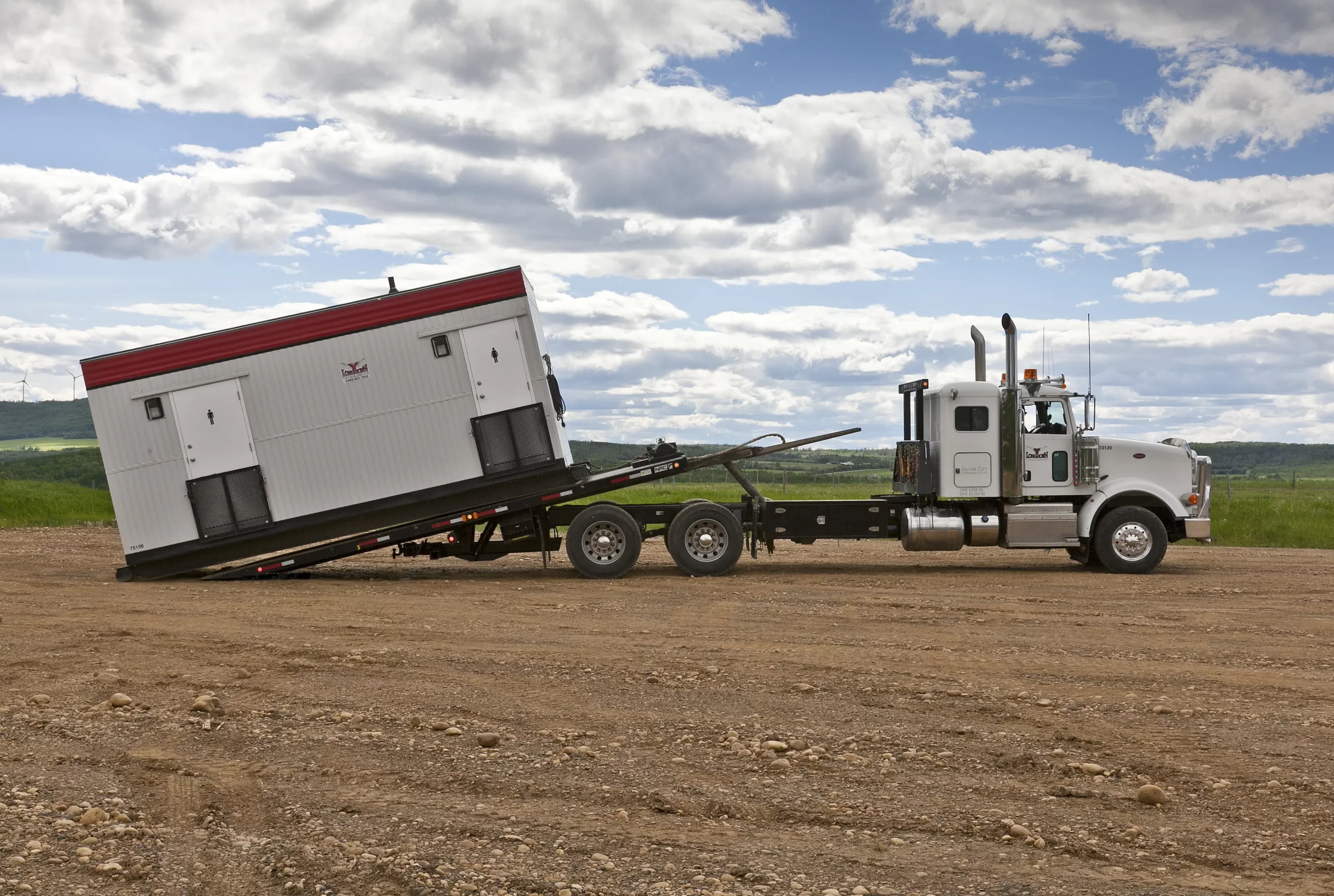
If you’ve ever been on a remote drilling site when sanitation is poorly planned, you already know it becomes the only thing people talk about. Not production. Not weather. Not schedule. Washrooms.
It sounds simple until you try to scale it across a moving, changing oilfield operation set up with generators and portable lighting rigs in the middle of nowhere.
The reality is that portable sanitation in oilfield work is not a fixed setup. It shifts with crew rotations, pad expansion, and whatever stage the project is in. What works for a five-person setup crew is completely wrong for a full drilling operation running around the clock.
It Starts With Understanding the Crew Rotation
Most sanitation-related planning mistakes happen because people look at total crew size instead of how that crew moves.
Oilfield work in Western Canada runs on rotation. A site might technically support 30 workers, but only 15 are on location at any given time. Then night shift comes in, and suddenly usage doubles in a short window.
According to Canadian occupational health guidelines, the best approach is for sanitation access to be close and available without delays during active shifts.
What gets missed in all of this oilfield sanitation planning is timing. A setup that feels fine at 10 a.m. can be overloaded by 7 p.m. when shifts overlap. So the real question is not “how many people are on site,” but “how many are using the system at the same time.”
The Site Layout Changes Faster Than People Expect
One thing outsiders don’t always understand is how often oilfield sites physically change.
A lease road gets extended. A drilling pad shifts. Equipment gets rearranged to make space for trucks, tanks, or trailers. Nothing stays exactly where it started.
Portable sanitation has to follow that movement.
If portable washrooms are placed early and never adjusted, you end up with a weird situation where the units are technically there, but nobody wants to walk 200 metres through mud or snow to use them. So they don’t.
On real sites, washroom placement usually follows a simple rule that sometimes is learned the hard way: if it slows workers down, it is in the wrong spot.
Terrain also plays a bigger role than most planning sheets show. For example, spring in Alberta will turn stable ground into soft, uneven surfaces. Winter brings frozen ruts and blocked access. Either way, mobility is not guaranteed.
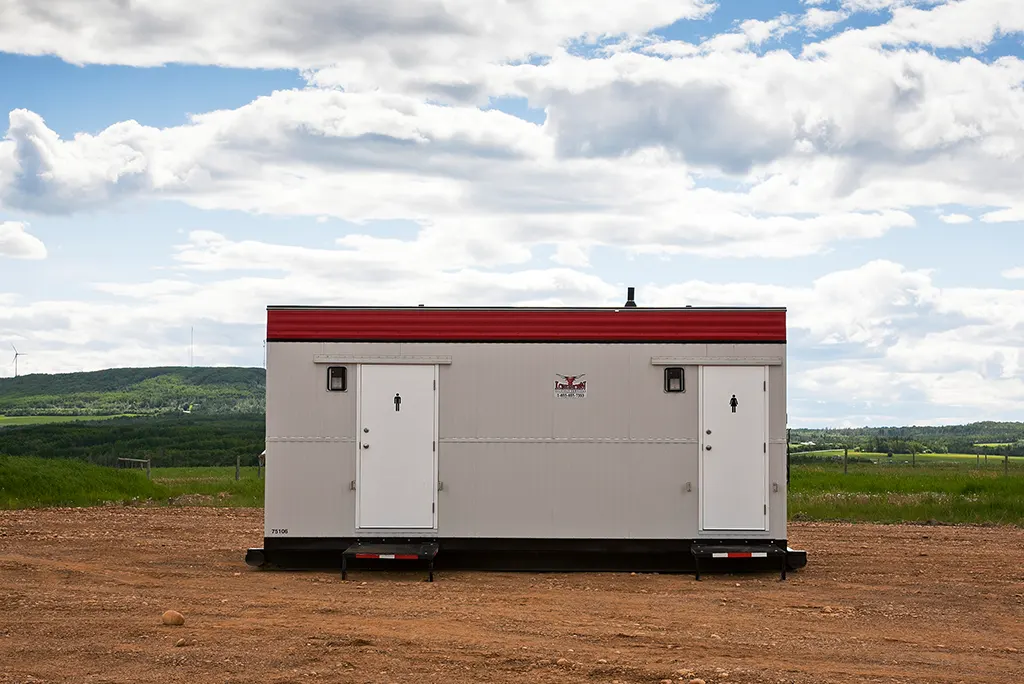
Usage Isn’t Linear Which Is Important for Portable Sanitation Planning
Another mistake people make is assuming washroom use is steady throughout the day and, of course, it rarely is.
Plan for the unexpected. Shift changes create pressure points, breaks create queues, and weather delays keep crews in the same area longer than expected. And once drilling ramps up, usage increases without warning. Health Canada workplace sanitation expectations don’t deal in averages for a reason. Real-world usage is uneven. That’s why smaller setups fail quickly on active sites. They might technically “cover” the number of workers, but they cannot handle peak demand.
A few practical realities crews see all the time:
- Morning and night shift overlap causes the highest demand
- Cold weather increases usage frequency due to hydration habits
- Larger crews don’t scale usage evenly, they spike in clusters
- Remote locations amplify delays because there are no backup facilities nearby
It’s not complicated math. It’s just uneven behaviour.
Servicing the Equipment Is What No One Wants to Talk About
Even a perfectly planned sanitation and washroom setup will break down if the equipment is not being regularly serviced.
The same applies to wellsite trailers and other key components of on-site worker accommodations.
Unfortunately, servicing on oilfield sites is not flexible. Sometimes, roads close, weather shifts, and access gets delayed. This means timing has to be built in from the start as to when to service the equipment.
On larger drilling programs, sanitation units may need multiple services per week. Smaller mobile crews might stretch longer, but only under stable conditions.
The mistake is assuming servicing will always happen “on schedule.” In remote Western Canadian conditions, that assumption is usually wrong at least once per project. When you are not servicing your equipment or a service date is missed and/or delayed, the impact is immediate. It affects morale first, then productivity, then eventually safety.
The Real Goal Is Invisible Infrastructure
Good sanitation planning is strange because success means nobody notices it.
If crews are talking about washrooms, something is wrong. If they aren’t, it usually means the system is working properly in the background.
The best washroom setup matches the reality of the site. They move when the site moves. They scale when crews scale. They get serviced before issues show up, not after.
It is less about equipment and more about anticipating how people actually behave in the field.
The job is tough enough already. Your washrooms and sanitation shouldn’t be a worry. Contact us. Get in touch with Longhorn Oilfield Services and keep your operation clean, efficient, and fully supported from start to finish.