

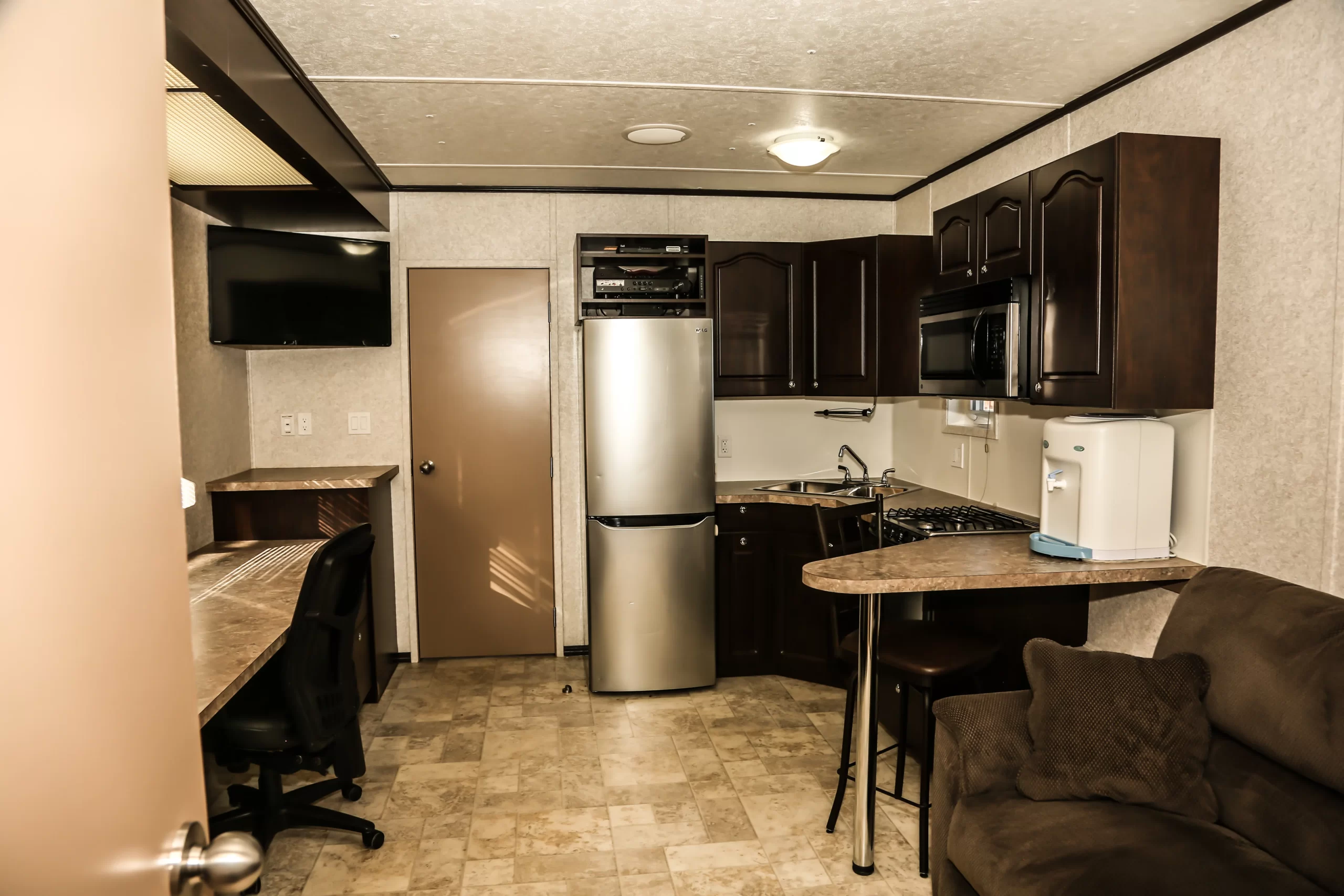
A wellsite shack has a pretty specific job. It needs to give people somewhere comfortable enough to eat, sleep, work, shower, and take a break, while still being practical enough to sit in the middle of an active oilfield.
That sounds simple until you think about what is actually involved.
A remote crew might be working long shifts, dealing with freezing temperatures outside, and spending several days at a location with very little nearby. The shack therefore becomes more than a trailer with a few rooms inside. It becomes part living quarters, part office trailer, and part escape from whatever is happening outside.
The 50/50 layout is particularly useful because it divides the trailer into two equal sides, with each side designed to function as a self-contained living and working space. That arrangement gives crews a surprising amount of functionality without requiring multiple separate trailers on the lease.
What Does “50/50” Actually Mean?
The name is fairly literal. A 50/50 wellsite shack is divided into two equal sections, with each side providing its own combination of living and work space.
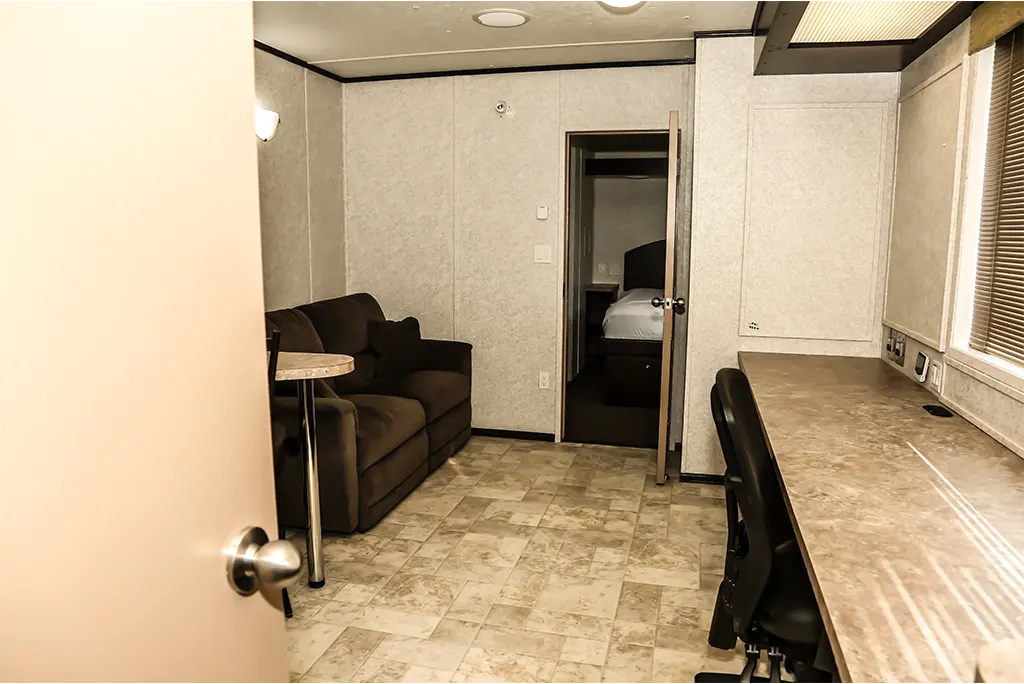
That makes the layout especially practical when two people need to share a unit without living directly on top of one another. Each side includes a private bedroom, bathroom with shower, kitchen, lounge area, work area, and an extra-long workstation, so the trailer can support both personal downtime and the practical demands of working remotely.
The important thing here is that the layout is not trying to turn the trailer into a luxury hotel. It is designed around how field crews actually use these spaces. Someone can finish a long shift, make something to eat, shower, get some work done, and have somewhere to sit down without needing to leave the unit. This is extremely helpful during a 12-hour shift rotation. It matters even more when the nearest town is a long drive away and the weather outside is miserable.
The Kitchen Is More Important Than It Looks
Nobody needs a gourmet kitchen in a wellsite accommodation. What people do need is a clean, functional place to prepare food without having to rely entirely on camp facilities or make another trip into town.
The full kitchen included in each side of the 50/50 layout gives occupants that independence. A proper kitchen area also means workers can prepare coffee before a shift, put together a meal after work, and store food without turning a workstation into an improvised eating area.
That sounds like a small convenience until you have spent several consecutive days working remotely. Small conveniences become important surprisingly quickly.
The same goes for the lounge. It gives workers a place to sit that is separate from the desk and bedroom, which helps the trailer feel more like an actual living space instead of a work box. After spending most of a shift around equipment, vehicles, noise, and other people, having somewhere quiet to sit for a while is useful.
A Private Bedroom Changes The Experience
Sleeping arrangements are one of the biggest differences between a basic field accommodation setup and a well-designed one.
Each side of the 50/50 shack includes a private bedroom, rather than treating sleeping space as an afterthought. That gives occupants somewhere they can close the door, get away from the activity outside, and actually settle down between shifts.
For crews working rotating schedules, that privacy can be especially valuable. A worker coming off nights needs to sleep while other people may still be moving around outside, and having a dedicated bedroom creates a much better environment than trying to sleep in a shared lounge or open bunk area.
The bathroom and shower are another practical part of the equation. Being able to shower inside the same unit means workers do not have to walk across a lease in winter conditions just to clean up after a shift.
The Work Area Keeps The Shack From Becoming A Mess
There is another side to remote accommodation that gets overlooked: people still have to work.
Supervisors, consultants, engineers, operators, and other field personnel may need somewhere to review documents, make calls, update reports, monitor information, or deal with administrative tasks during a shift. Trying to do all of that from a kitchen counter is possible, but it gets old quickly.
The 50/50 design includes a dedicated work area and an extra-long workstation, giving occupants a proper place to spread out and get things done. You can finish an inspection report, close the laptop, and move into the lounge rather than having your computer and paperwork sitting beside your dinner.
For remote operations, that distinction can make the accommodation feel considerably more functional.
Starlink Is One Add-On Worth Considering
Internet access used to be one of the biggest headaches associated with remote accommodation. Being away from town meant accepting slow connections, unreliable service, or limited connectivity, depending on where the site happened to be.
That has changed considerably with satellite internet technology. Starlink can be added to a 50/50 wellsite shack to provide high-speed internet access in locations where traditional wired connections simply are not practical.
For a field worker, that can mean being able to make video calls, send large files, access cloud-based systems, communicate with the office, or simply stream something after a long shift. It does not turn a remote lease into downtown Calgary, but it can remove a surprisingly large amount of friction from day-to-day life.
The key is treating connectivity as part of the accommodation plan rather than something to figure out after the trailer arrives.
The Best Shack Will Be The One That Fits The Work and The Worker
A 50/50 wellsite shack makes sense because it combines several requirements into one mobile unit. Instead of bringing separate sleeping quarters, office space, kitchen facilities, and portable bathrooms to the site, the layout puts those functions together in a way that works for remote crews.
That does not mean every project needs the same setup. A large drilling operation with several accommodation units will have different requirements from a smaller facility construction crew, and the right configuration should reflect how many people are actually using the site and how long they will be there.
The bigger point is that remote accommodation should be treated as operational equipment, not just somewhere for workers to sleep. If the space is uncomfortable, poorly laid out, or missing basic functionality, crews feel the effects every day.
A good setup does the opposite. It gets out of the way and lets people concentrate on the work.
For any organization or team outfitting a remote drilling, completions, or facility construction project and who are in need of a 50/50 wellsite shack that combines practical living space with a proper field workspace, contact us. We’re here. Longhorn Oilfield Services can help you put together an accommodation setup suited to the demands of the site, including useful options such as Starlink connectivity.