

On an oilfield site, most people only think about lighting and power when something fails. However, remote oilfield sites don’t really give you second chances with power systems. Once you’re out there, you’re committed to whatever was brought in. And that’s where most planning goes sideways. The problem is often not in the equipment itself, but in how it gets matched to actual site conditions.
The Problem Starts With Guessing The Load
When you are planning lighting and power for any oilfield site, the process is pretty simple and straightforward. A site gets evaluated and someone estimates the power needs for the operation. Unfortunately, field conditions are unpredictable. They don’t behave like spreadsheets.
On a typical remote setup in Western Canada, you’re stacking loads all at once. A site will have generators running camp trailers, LED light towers running full tilt across work zones, heaters kicking in when temperatures drop, plus smaller equipment that nobody really counts until it’s already plugged in.
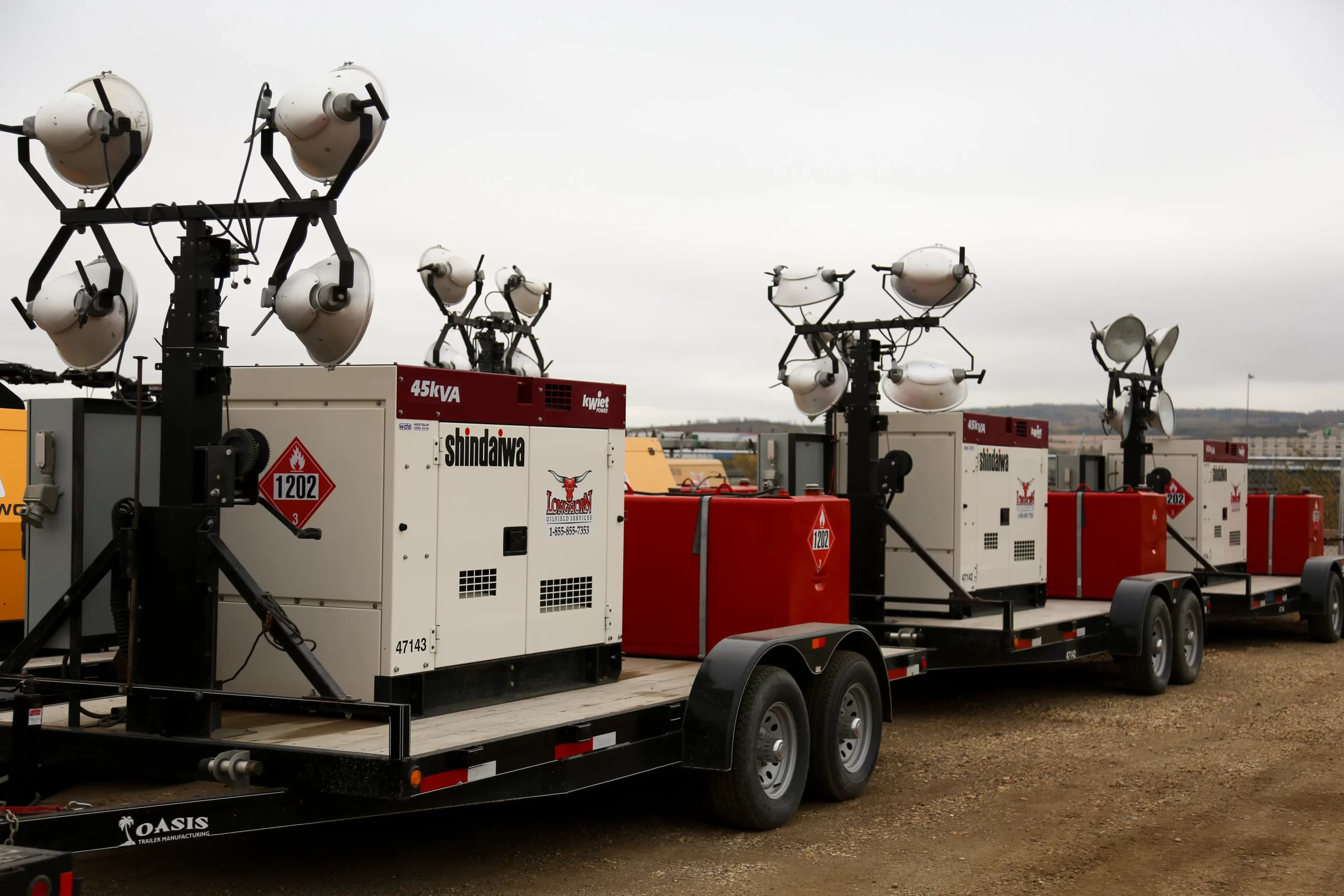
Longhorn’s 20–25 kW setups and larger 45 kVA whisper-quiet units exist for exactly this reason. It’s not because one size is “better,” but because sites rarely behave the way they were planned.
The 45 kVA units, for example, are often used when multiple trailers, washrooms, and lighting systems are running together. Not because it sounds efficient, but because the site simply demands it.
And in cold conditions, everything shifts again. Diesel engines don’t behave the same at -30°C. Heating loads spike. Even fuel consumption changes depending on how hard everything is working just to stay operational.
So if the system feels “just enough” on paper, it usually isn’t enough in practice.
Lighting Isn’t Just Brightness — It’s How The Site Feels At Night
There’s a noticeable difference between a site that is technically lit and one that is actually usable at night.
Old lighting systems used on oilfield sites would throw light in uneven patches. Workers would get bright zones and then pockets of darkness where crews would have to slow down or just avoid them altogether. That’s where mistakes tend to happen.
Modern LED towers change that dynamic quite a bit.
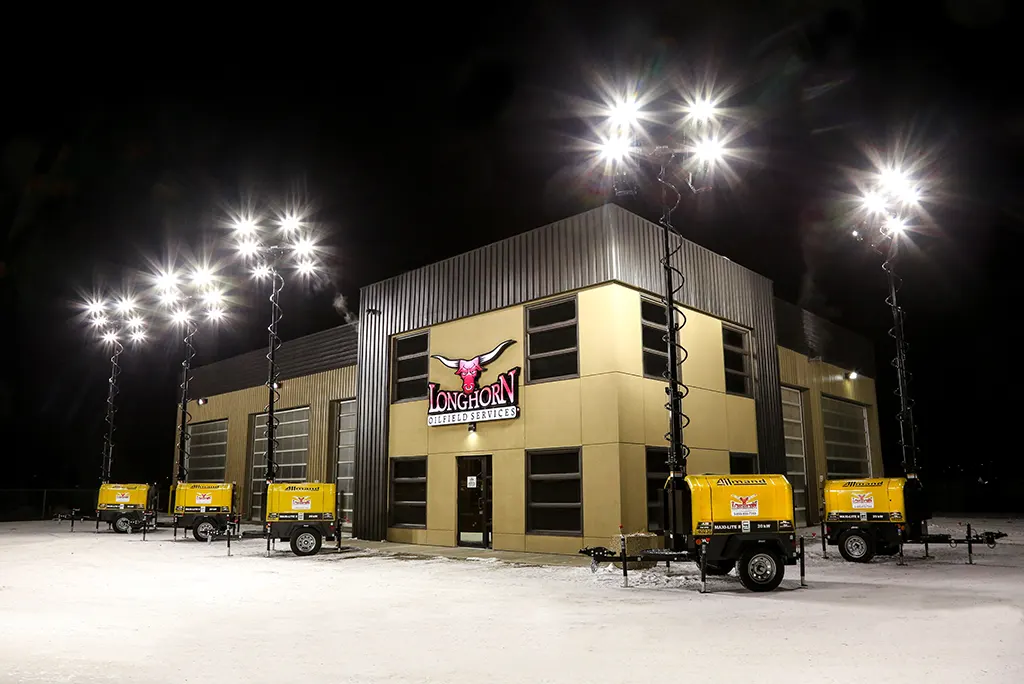
Longhorn’s 6-light LED systems, for example, are built around 320W LEDs paired with efficient generators that can run for days on a single tank under the right load conditions. In practice, that often means fewer refuels and more stable light output across full shifts.
And then there’s fuel burn. The difference between older towers and modern LED systems isn’t small. It can be the difference between refuelling every couple of days versus stretching operations to nearly a week depending on setup.
Power And Lighting Should Behave Like One System, Not Two
This is where good setups separate from average ones.
A lot of sites treat lighting and power as separate problems. One contractor handles generators. Another handles lighting. And nobody is really responsible for how both interact under real load. But in practice, they’re tied together completely.
A 25 kVA whisper-quiet generator has more advantages than being able to run quietly near camp trailers. It’s about stable output while also supporting lighting systems that may already be drawing consistent load for 12-14 hours at a time.
Longhorn’s extended-run configurations are built around these concepts. This means fewer interruptions to your project, larger fuel capacity, and enough buffer to avoid pushing power and electricity systems to their limits every day.
The Real Goal is Reliability in Your Lighting and Power Systems on Site
Nobody remembers a good lighting and power setup. That’s kind of the point.
When it’s done right, crews stop thinking about it. Lights turn on every night without hesitation. Generators just run. Fuel lasts longer than expected. No one is troubleshooting power distribution at 2 a.m. in freezing wind.
The best power and lighting systems don’t draw attention to themselves. They just quietly hold the site together while everything else is moving. And in remote oilfield work, especially across Alberta and northern BC, that kind of stability isn’t a luxury. It’s what keeps production on schedule when conditions are anything but predictable.
If your next project needs remote site lighting and power systems built for real Western Canadian field conditions, contact us. We would love to talk with you about what options may be available to you. Connect with Longhorn Oilfield Services to keep your operation running steady, efficient, and ready for whatever the site throws at it.