

If you’ve ever worked on a drilling or construction site in the Montney or Duvernay, or in any similar remote region, you already know that if you lose access to fuel for even a few hours, the ripple effect can be surprisingly expensive.
Generators stop running, heaters shut down, pumps sit idle, and schedules that looked achievable the day before suddenly begin slipping.
People often focus on how much fuel a project will consume. That’s important, of course, but it isn’t the whole story. The bigger question is how that fuel is going to reach the site consistently, especially when the project is several hours from the nearest service centre and the only access road has turned into a muddy mess after two days of rain.
That is why more operators across Northern Alberta and northeastern British Columbia are relying on on-site fuel skids instead of scheduling constant fuel deliveries. The convenience is only part of the equation. In reality, the biggest advantage is reliability.
Remote Roads Don’t Always Cooperate
Anyone who has spent time working in Western Canada’s energy sector knows that road conditions can change without much warning. Winter roads can become impassable after heavy snowfall, while spring breakup often leaves gravel access roads soft enough to restrict heavy truck traffic for days at a time.
In regions like the Montney and Duvernay, many projects are located well away from major highways. A fuel truck might need to travel more than 100 kilometres after leaving the pavement before it even reaches the lease. Every additional kilometre adds time, cost, and another opportunity for delays.
Most fuel suppliers do an excellent job of keeping deliveries on schedule, but they cannot control the weather. They also cannot prevent road closures, mechanical issues, or unexpected demand from other projects happening in the same region.
That uncertainty is exactly why many site supervisors prefer keeping a significant volume of diesel on location rather than depending on deliveries every couple of days.
Small Interruptions Become Big Problems
One delayed delivery might not sound like a serious issue.
Until you start adding up everything that depends on fuel.
Modern oilfield sites often have multiple generators running continuously. Portable light towers may operate throughout the night during winter drilling programs. Heated office trailers, wellsite shacks, pumps, compressors, and support equipment all compete for the same fuel supply.
If one generator runs dry, the effects spread quickly across the site.
Workers may have to pause operations while equipment is refuelled. Heating systems can stop during extreme cold. Lighting and power may be reduced, limiting work that can safely continue after dark. Even communication equipment may be affected if backup power is unavailable.
Downtime in the oilfield rarely comes from one dramatic event. More often, it comes from a series of smaller problems that build on one another until productivity starts slipping.
Fuel Skids Create Breathing Room
An on-site fuel skid changes the conversation completely.
Instead of worrying about whether today’s delivery truck arrives before noon, operators have a reserve already sitting on location. Fuel can be transferred whenever equipment needs it rather than whenever the delivery schedule allows.
That flexibility becomes especially valuable during periods of unpredictable weather.
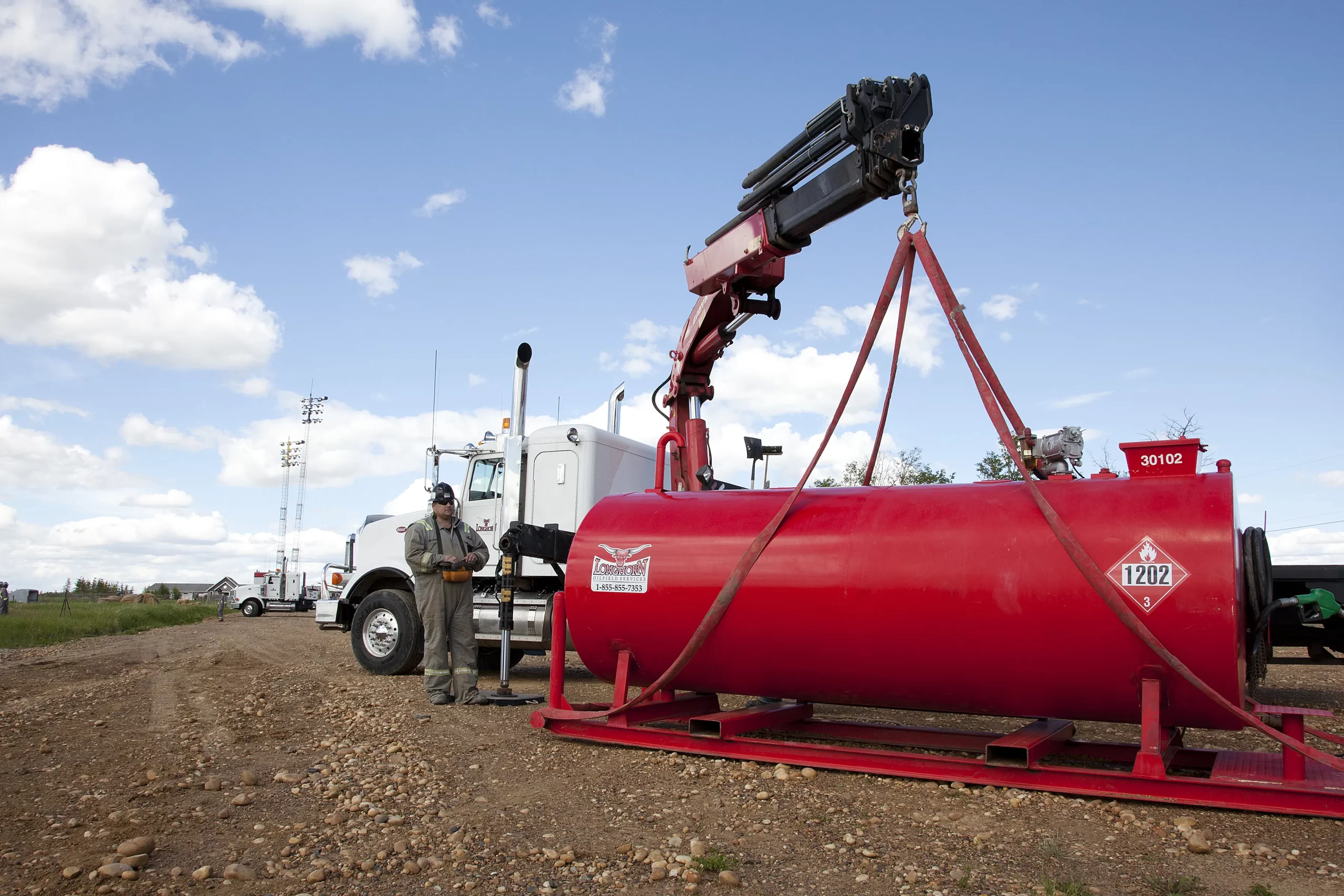
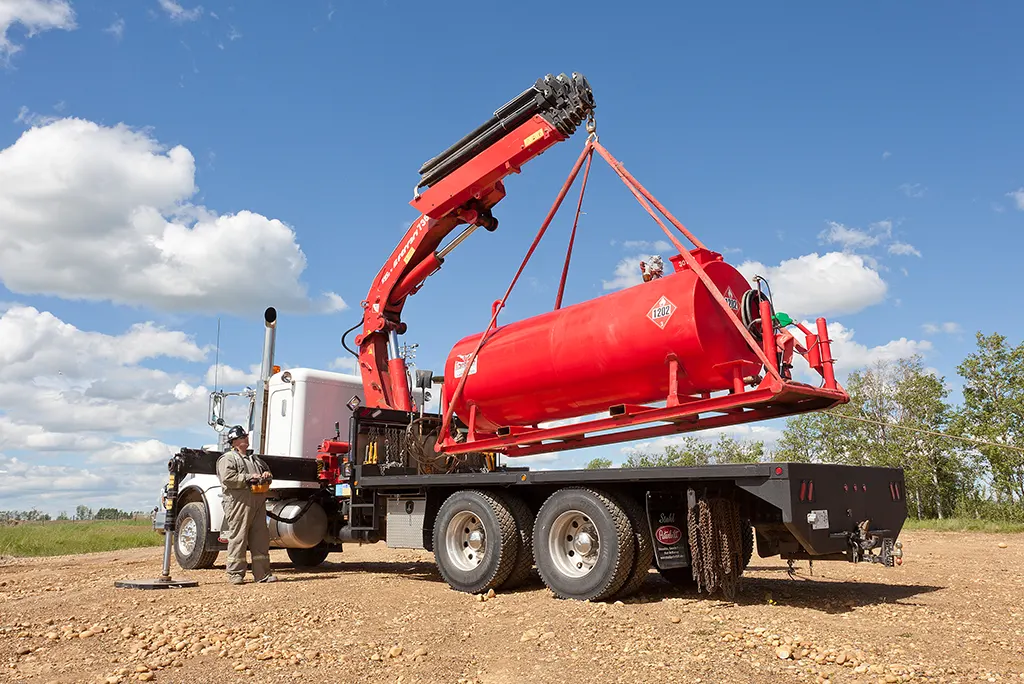
Longhorn’s fuel skids are available in capacities ranging from compact 100-gallon units all the way up to 5,000-gallon tanks, allowing projects to match storage capacity with expected fuel consumption. Smaller enclosed skids are designed with protective cages and fork pockets, making them practical for mobile operations that relocate equipment regularly. Larger stationary tanks are better suited to drilling programs and long-term construction sites where continuous fuel availability is the priority.
Having multiple size options also prevents another common mistake: bringing far more storage capacity than a project actually requires.
Better Logistics Usually Mean Lower Costs
Many people assume fuel skids are simply about convenience.
They certainly make life easier, but there is a financial side that often gets overlooked.
Every fuel delivery requires scheduling, transportation, and coordination. Multiple deliveries each week increase trucking costs while also consuming valuable time for site personnel who need to receive shipments and monitor fuel levels.
Reducing delivery frequency can simplify the entire operation.
Instead of constantly tracking incoming fuel trucks, supervisors can spend more time managing the work itself. Equipment operators also spend less time stopping productive work to coordinate refuelling activities.
The savings may not appear as one dramatic line item on a budget, but over the course of a multi-month drilling program, fewer deliveries often translate into lower operating costs.
Choosing The Right Fuel Skid Matters
Not every project requires maximum storage capacity.
A short-duration maintenance project with limited equipment might only need a compact 100 or 500-gallon skid that can easily be repositioned as work progresses.
Longer drilling programs typically require larger storage solutions capable of supporting generators used for wellsite shacks and accommodations and more, heavy equipment, portable lighting, and heating systems without constant replenishment.
Before selecting a fuel skid, project managers should consider several practical questions. How many pieces of equipment require daily refuelling? How frequently can fuel deliveries realistically reach the site? Will the project remain in one location, or will equipment be moved regularly? Finally, what seasonal conditions are expected during the life of the project?
Answering those questions usually leads to a much better decision than simply selecting the largest tank available.
On-Site Fuel Skids is Your Best Fuel Storage Solution for a Remote Site
An on-site fuel skid provides a level of flexibility that frequent deliveries simply cannot match, particularly in regions where road access and weather have a habit of changing the plan.
Having fuel available when equipment needs helps eliminate unnecessary interruptions, supports safer operations, and gives supervisors one less logistical challenge to worry about during an already demanding project.
When every hour counts, having reliable fuel on site is not just convenient. It becomes part of keeping the entire operation moving.
If you’re preparing for a drilling, completions, or facility construction project in the Montney or Duvernay, contact us. Don’t wait. Longhorn Oilfield Services can supply the right fuel skid for your operation. With equipment ranging from 100 to 5,000 gallons and strategically located yards in Dawson Creek, Fox Creek, and Grande Prairie, our team can help you build a dependable worksite that stays fuelled, productive, and ready for whatever the season brings.