

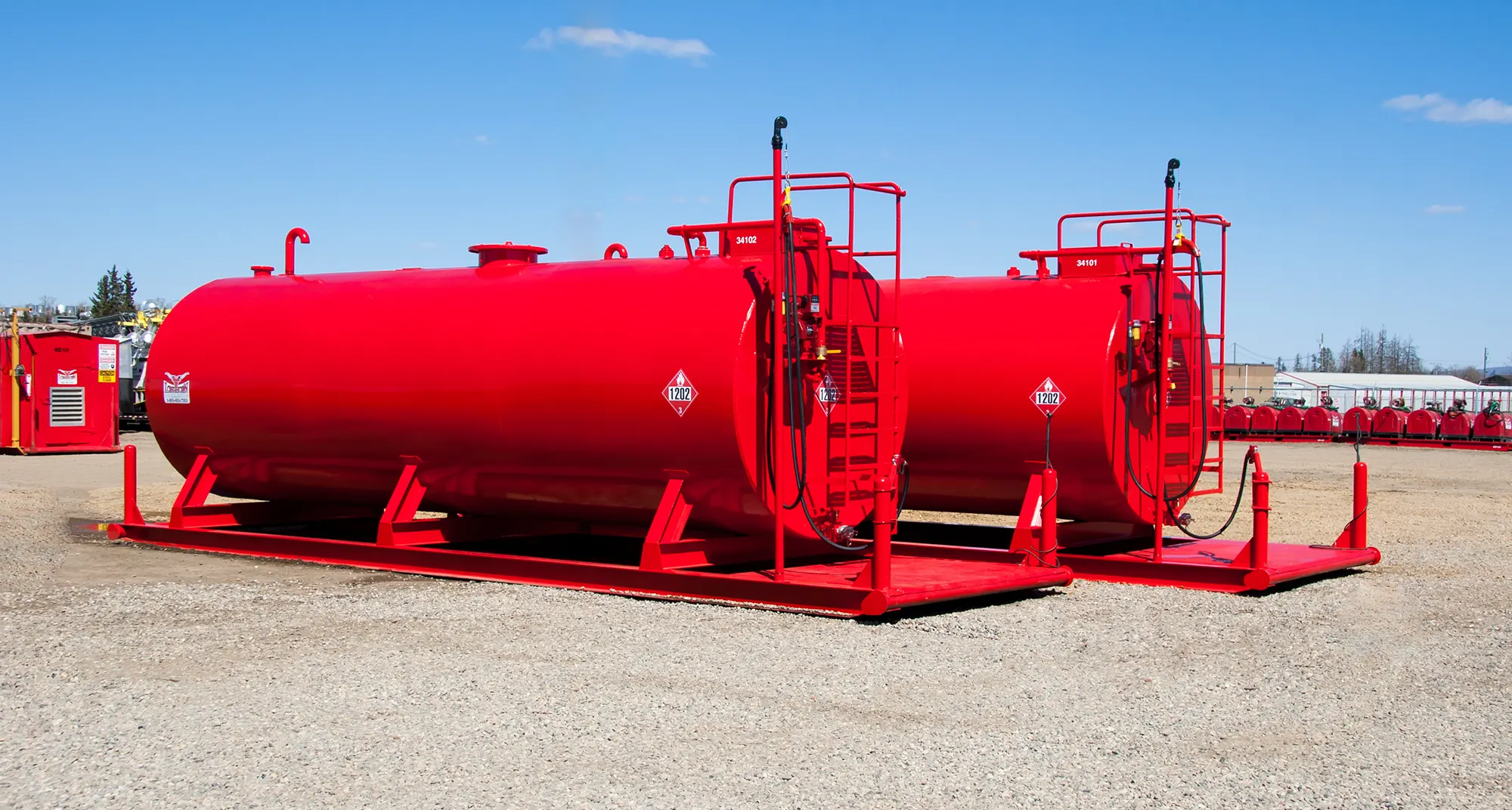
Fuel logistics do not get much attention until something goes wrong. A truck might not be able to refuel equipment, the generators start running dry, and work slows down because someone underestimated fuel consumption. None of this is dramatic on paper, but on a remote oilfield site, it can stall an entire day of operations. That is why choosing the right fuel storage tank for an oilfield project matters a great deal. Too small, and you are constantly waiting for deliveries. Too large, and you are hauling unnecessary weight around leases that change every few weeks. Most operations fall somewhere between 100 and 5,000 gallons. The trick is knowing which size makes sense for the job you are running.
Start With Your Actual Fuel Demand
The first step is simple. You need a realistic estimate of how much fuel the site actually burns in a typical day.
Generators, pumps, heaters, trucks, light towers. They all pull from the same supply.
For example, a 25kVA diesel generator might burn roughly 2.5 to 3 litres per hour under moderate load. Run that unit continuously and you are looking at around 60 to 70 litres per day. Add two or three lighting towers, a heater unit, and some mobile equipment and the daily demand climbs quickly.
It is not unusual for a mid-sized oilfield site to use 300 to 800 litres per day depending on the setup.
Once you know the approximate daily burn rate, tank sizing becomes far easier to figure out.
Evaluating Smaller Fuel Storage Tanks for Oilfield Sites: 100 to 500 Gallons
Smaller fuel storage tanks work best when projects are mobile or short-term.
A 100 to 500 gallon tank gives flexibility. It is lighter. Easier to move. It can be loaded onto trucks without specialized lifting equipment.
Situations where smaller tanks make sense include:
- Short-duration work where fuel deliveries happen regularly
- Mobile crews relocating between sites
- Equipment setups with modest fuel consumption
The trade-off is obvious. Smaller tanks require more frequent refilling. If a fuel truck is delayed or weather blocks access roads, operations can feel that gap quickly. Still, for certain projects, mobility matters more than capacity.
The Mid-Range Sweet Spot for Fuel Storage: 1,000 to 2,000 Gallons
For many oilfield projects, fuel storage tanks in the 1,000 to 2,000 gallon range are the most practical choice.
These hold enough fuel to support several days of oilfield operations and they remain portable enough to relocate when drilling or service work shifts as needed.
In Western Canada, there are many remote sites that rely on gravel roads that can become unpredictable during spring thaw or heavy rain. Fuel deliveries do not always arrive exactly when scheduled. A mid-sized tank provides a buffer.
For the sake of certainty and minimizing the risk of downtime, a crew should aim to keep three to five days of fuel supply on hand. That safety margin reduces stress when schedules shift or weather slows transport trucks.
When Large Fuel Storage Tanks Make Sense for an Oilfield Site: 3,000 to 5,000 Gallons
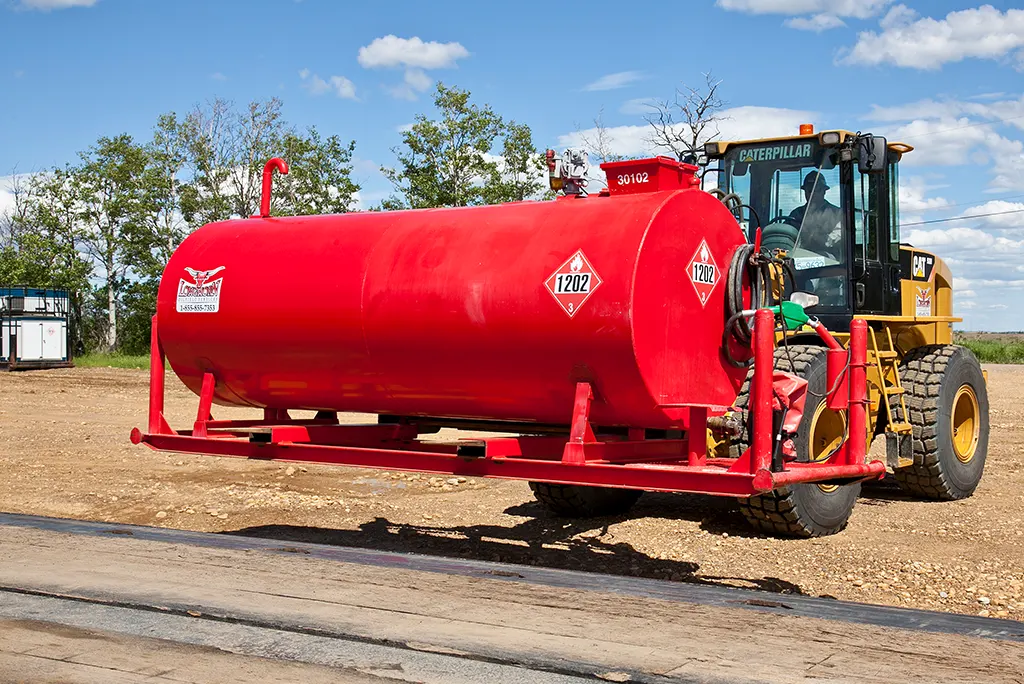
Large fuel storage tanks are typically required for longer-term operations. That is, when you’re dealing with multi-week drilling programs, remote infrastructure build, and/or projects where its equipment will stay in place for extended periods.
At this scale, a project’s daily fuel consumption can reach thousands of litres. That quantity has to cover generators running 24 hours, heated trailers, multiple service vehicles, and pumps and compressors operating continuously. It adds up quickly. A 5,000-gallon tank gives operators breathing room. Fuel deliveries become less frequent, and supply planning becomes easier.
There is also a safety advantage. Larger tanks reduce the need for constant handling and refilling, which lowers spill risk during repeated transfers.
Of course, mobility decreases with size. A tank this large is not something crews casually move every few days.
A Few Practical Factors People Forget When Considering a Fuel Storage Tank
The fuel tank size you carry on-site is important but several other details deserve attention when selecting fuel storage equipment.
The first is what transport access you have to your site. Some remote oilfield sites are hours from major highways and narrow access roads can limit what size fuel trucks can reach the location.
The second thing to think of is fuel containment and environmental protection. Canadian regulations often require secondary containment systems to reduce the risk of a fuel spill. Proper skid designs that help meet those standards while keeping transport simple is key.
Third, you have the weather to navigate. Winter changes everything. Diesel thickens, pumps slow down, and equipment works harder. Fuel usage often increases during cold months due to heaters and extended engine idling.
Planning fuel storage without considering seasonal demand can leave crews scrambling mid-project.
Which Fuel Storage Tank is Best for Your Project is a Part Of Operational Planning
On remote oilfield sites, fuel inventory and fuel storage is a part of essential operational planning. Every piece of equipment depends on it.
Choosing the right fuel storage tank size reduces supply headaches. It protects schedules. It helps crews focus on the actual work instead of waiting for the next delivery truck. Investing the time on the front end to settle on the right fuel storage tank for your remote oilfield site goes a long way once operations are underway.
If your upcoming oilfield project requires dependable fuel storage solutions built for Western Canadian conditions, contact us and our team would be happy to discuss with you what options may be available. Connect with Longhorn Oilfield Services to keep your site fuelled, efficient, and ready to run without interruption.