

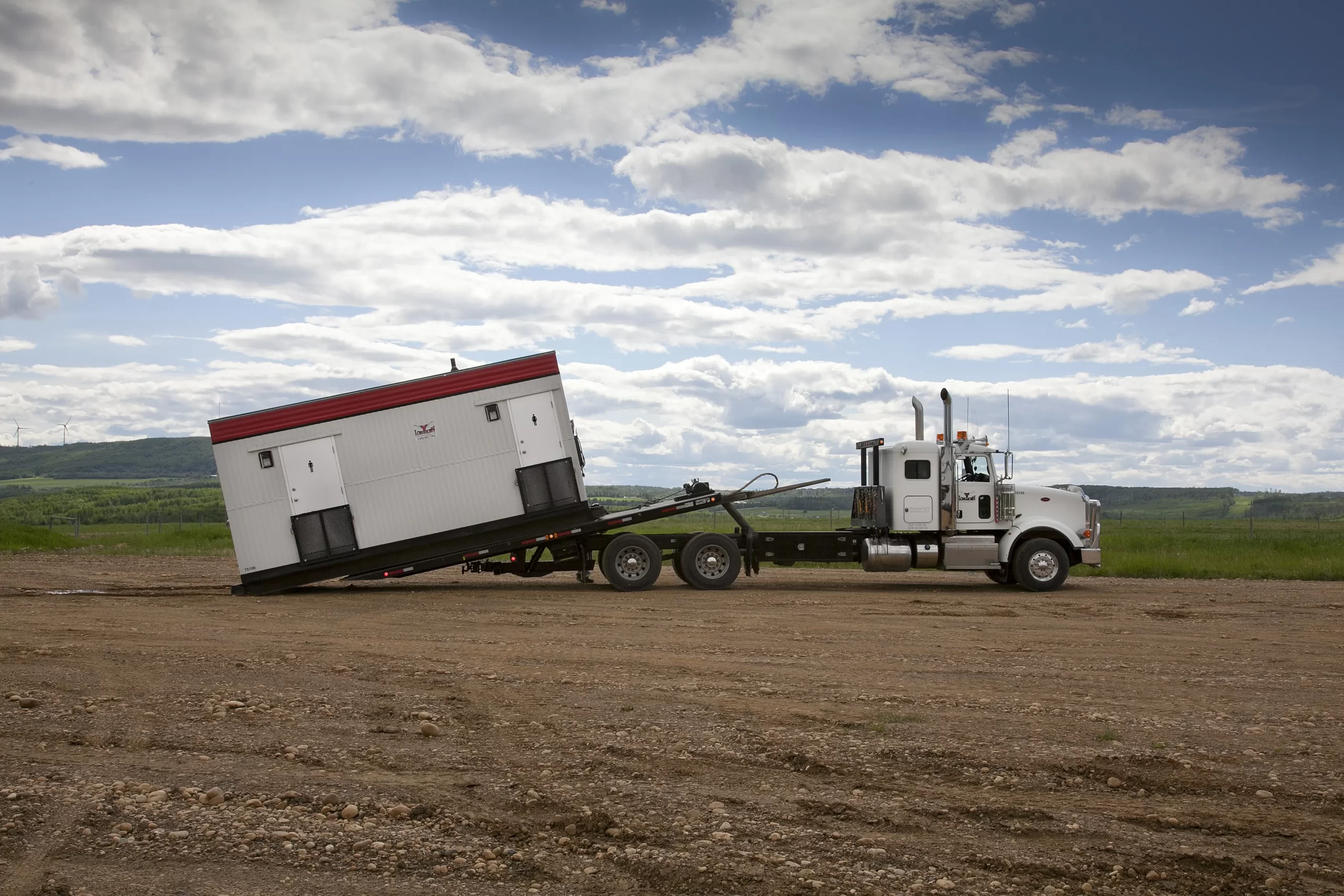
A frozen washroom is one of those problems that sounds minor until you are standing outside a drilling pad in January trying to figure out why nobody can use the facilities.
In Northern Alberta and northeastern British Columbia, temperatures can fall well below -20°C, and cold snaps below -30°C are not unusual, so a portable washroom that works perfectly in October can become a very different piece of equipment by mid-winter.
While we often think of the toilet when we think of portable washrooms, freeze-ups are usually related to other factors. Water lines, drains, tanks, valves, and exposed connections are all vulnerable to temperatures that remain below freezing for an extended period.
A proper winterized washroom trailer is designed with those conditions in mind. The goal is not simply to put a heater inside a trailer and hope for the best. Good winter planning considers insulation, enclosure, water supply, wastewater handling, placement, servicing, and what happens when the temperature suddenly drops another 10 degrees overnight.
Why Standard Portable Washrooms Struggle In Extreme Cold
The traditional portable toilet has its place, but it is not necessarily the right answer for a remote drilling or completions pad in the middle of winter.
A basic standalone unit has limited protection from the elements, and its exposed components can become vulnerable when temperatures remain extremely low for extended periods.
The same issue applies to temporary washroom arrangements that were designed around warmer weather. A setup that depends on exposed water connections or inadequately protected wastewater lines has very little margin for error once temperatures plunge. Even if the interior remains reasonably warm, the sections of the system sitting outside can still freeze.
The physics are fairly unforgiving. Water expands as it freezes, which can put pressure on pipes and fittings and potentially damage components. A blockage can also prevent wastewater from moving properly, creating a sanitation problem on top of the original equipment issue.
What Makes A Washroom Trailer Better Suited To Winter?
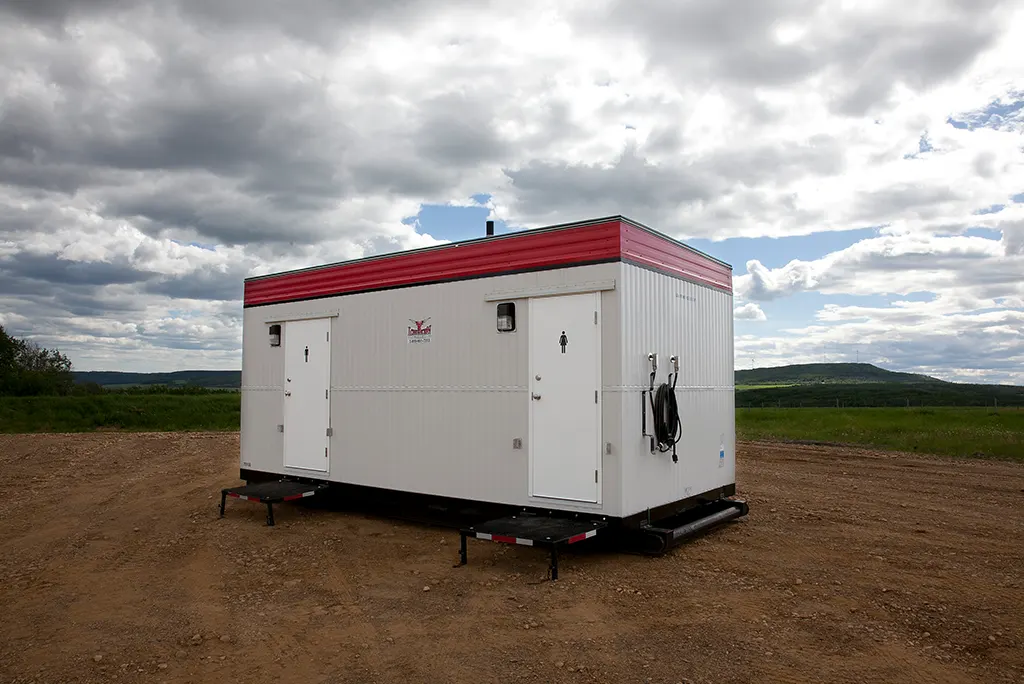
The enclosure itself is the first thing worth looking at. A properly winterized washroom trailer provides a much more controlled environment than an exposed portable unit, giving water and wastewater components greater protection from wind and temperature swings.
Proper insulation is essential in preventing heat loss against the temperature outside. Wind can increase the rate at which heat is pulled away from surfaces, and poorly sealed doors or gaps around service penetrations can make it harder to maintain a stable interior temperature.
Double-insulated walls and an enclosed design can help maintain the internal environment while reducing the workload placed on the heating system. That does not make a trailer magically freeze-proof, but it provides a much better starting point for operating through a northern winter.
Placement of your portable washroom matters as well. A washroom trailer stationed in an exposed, wind-swept area may face more difficult conditions than one positioned in a sheltered and properly prepared part of the site. At the same time, the unit needs to remain accessible to users and service vehicles, so there is a balance between protection and practicality.
For supervisors, the important question is not whether a unit is advertised as “winterized.” Ask what has actually been done to prepare it for the temperatures and conditions expected at your site.
Water Supply And Wastewater Need Different Plans
Keeping the inside of a washroom warm is only half the battle. Water still has to reach the fixtures, and wastewater still has to leave them without freezing somewhere along the way.
There are several ways remote sites can approach wastewater management, and the right choice depends on the project, location, expected crew size, and available infrastructure. Where a suitable sewer connection exists, an external tie-in can provide a straightforward route for wastewater. On truly remote pads, however, a holding tank may be more practical because there is no municipal sewer system waiting nearby.
Holding tanks also introduce their own winter considerations. The tank needs to be appropriately positioned and managed, while pump-out access has to remain possible even after significant snowfall. A service plan that works beautifully on paper is not much use if a vacuum truck cannot safely reach the tank.
Water supply deserves the same attention. Hoses and connections to your washroom that run outside a heated enclosure are particularly vulnerable. They need the appropriate protection for low-temperature winter conditions.
The fewer unknowns you have at -30°C, the better.
Winter Preparation Should Happen Before Delivery
The worst time to discover a washroom is not properly prepared for winter is when the forecast suddenly changes. By then, your offices, wellsite accommodations, and portable washroom trailers are already on location, the crew is using it, and fixing a problem may require a service call in difficult conditions.
A better approach is to treat portable washroom winterization as part of equipment preparation. All units should be inspected, have their heating and plumbing systems checked, and a supervisor should note where vulnerable connections are.
Site supervisors can also make their own pre-winter checks once the trailer arrives. Confirm that heat is reaching the areas that need it, make sure doors and seals close properly, and look over external water and wastewater connections rather than assuming they are protected because the trailer itself is insulated.
It is also worth discussing what happens during a power interruption. If heating depends on an electrical supply and the generator goes down during a severe cold snap, the washroom can quickly become vulnerable. Backup power and an emergency response plan may therefore be just as important as the insulation itself.
Winter equipment planning is mostly about eliminating surprises.
A Simple Supervisor’s Approach To Winter Washrooms
Nobody needs a 20-page procedure to keep a portable washroom running through winter. What matters is knowing the weak points before they become problems and making sure someone is responsible for monitoring them.
Before a winter drilling or completions program gets underway, supervisors should confirm the expected overnight temperatures, crew size, water source, wastewater arrangement, heating requirements, service access, and backup plan. Those details give you a much better picture of whether the selected washroom setup is actually suitable for the site.
It is also worth checking the forecast throughout the project rather than treating winterization as a one-time task. A washroom that handles -10°C comfortably may need more attention when the forecast suddenly calls for -30°C and strong winds.
The best system is the one that continues working when conditions get ugly. That means choosing an enclosed, properly prepared unit, protecting the plumbing and connections, keeping access clear, and making sure servicing can happen before the system reaches its limits.
A frozen washroom is frustrating. A preventable frozen washroom on a remote drilling pad is worse because everyone involved had plenty of warning that winter was coming.
Winter conditions leave very little room for equipment that is not up to the job. Are you searching for winterized portable washrooms in Canada? Contact us. Longhorn Oilfield Services provides portable washroom solutions for remote Western Canadian worksites, with equipment prepared for the realities of cold-weather operations.